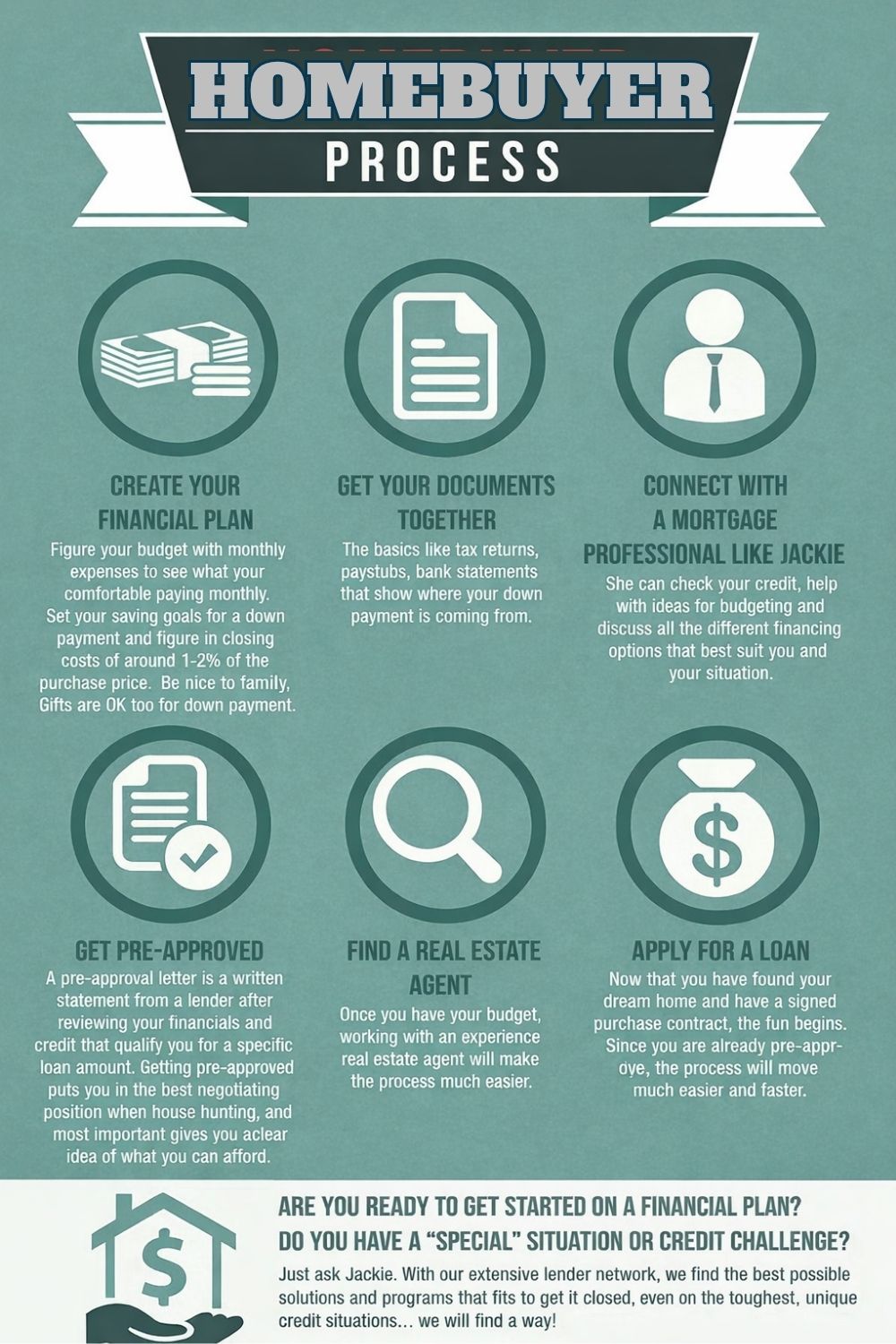
Are you ready to get started on a financial plan?
Do you have a “special” situation or credit challenge? Just ask Jackie. With our extensive lender network, we find the best possible solutions and will do what it takes to get it closed, even on the toughest deals. , she has programs that fit most situations. Self Employed, Entrepreneur, unique credit situations… we will find a way!
Frequently Asked Questions About First-Time Home Buyer Programs
Who qualifies as a first-time home buyer?
Many people assume you must have never owned a home before, but that is not always the case. Depending on the loan program, buyers who have not owned a primary residence within the last few years may still qualify as first-time home buyers. Eligibility requirements vary by lender and program.
How much money do I need for a down payment?
The amount depends on the loan program you choose. Some options require a traditional down payment, while others offer low-down-payment solutions. My Lender Jackie also works with programs that can help qualified buyers purchase a home with minimal upfront funds. Reviewing your goals and financial picture is the best way to determine the right option.
Can I buy a home if I have less-than-perfect credit?
Yes. A credit challenge does not automatically prevent someone from becoming a homeowner. Different loan programs have different credit requirements, and many borrowers are surprised to learn they have more options than they expected. A lender can review your situation and help identify the programs that fit best.
What is the first step in buying a home?
Getting pre-approved is usually the smartest place to start. A pre-approval helps establish a realistic budget and gives sellers confidence that financing is already being reviewed. It can also uncover issues early, before you begin shopping for homes.
How long does the home buying process take?
Every transaction is different. Factors such as financing, property selection, inspections, appraisals, and seller timelines all affect the schedule. Some purchases move quickly, while others take longer depending on market conditions and the complexity of the loan.
What documents will I need when applying for a mortgage?
Documentation varies based on the loan program and borrower profile. Lenders commonly request information related to income, assets, employment, and identification. Certain programs may require additional paperwork, while others offer alternative documentation options.
Can self-employed borrowers qualify for a first-time home buyer loan?
Yes. Self-employed buyers often have access to specialized mortgage programs that take a different approach to income verification. Because every situation is unique, it helps to work with a lender experienced in finding solutions for entrepreneurs and business owners.
Are FHA loans a good option for first-time buyers?
For many buyers, FHA financing can provide a practical path to homeownership because of its flexible qualification standards and lower down payment requirements. The right loan depends on your credit profile, available funds, long-term plans, and overall financial goals.
Can I receive help with closing costs?
In some cases, yes. Depending on the loan program and transaction structure, buyers may have options for assistance with certain upfront costs. Available solutions vary based on qualifications, property location, and lender guidelines.
What is the difference between pre-qualification and pre-approval?
Pre-qualification is typically an initial estimate based on information you provide. Pre-approval is more detailed and involves reviewing documentation to determine borrowing capacity. Most real estate professionals recommend obtaining a pre-approval before actively shopping for a home.
Do first-time home buyers pay mortgage insurance?
Some loan programs require mortgage insurance, especially when making a smaller down payment. The cost and structure depend on the type of loan selected. Reviewing loan options side by side can help determine which program offers the best overall value.
What if I have a unique financial situation?
Not every borrower fits neatly into traditional lending guidelines. Buyers who are self-employed, have experienced credit challenges, earn income from multiple sources, or have other unusual circumstances may still qualify for financing. Working with a lender that has access to a broad network of loan programs can open doors that standard lending channels may not.