
California Bridge Loans Case Study: Buying a $2.5 Million Laguna Hills Home Before Selling
The buyers had found their next home, but much of the money they planned to use for the purchase was still tied up in their Mission Viejo residence. Selling first could have meant temporary housing, a second move, or losing the Laguna Hills property while waiting for their existing home to close.
The income side of the file added another layer. The borrowers were self-employed, and legitimate business deductions reduced the taxable income shown on their returns. Their business produced strong cash flow, but conventional income calculations did not reflect that financial picture clearly.
Our team at Summit Lending combined a California Bridge Loan with a Bank Statement Mortgage. The bridge financing provided access to equity from the current home, while the bank statement program evaluated recurring business deposits for income qualification.
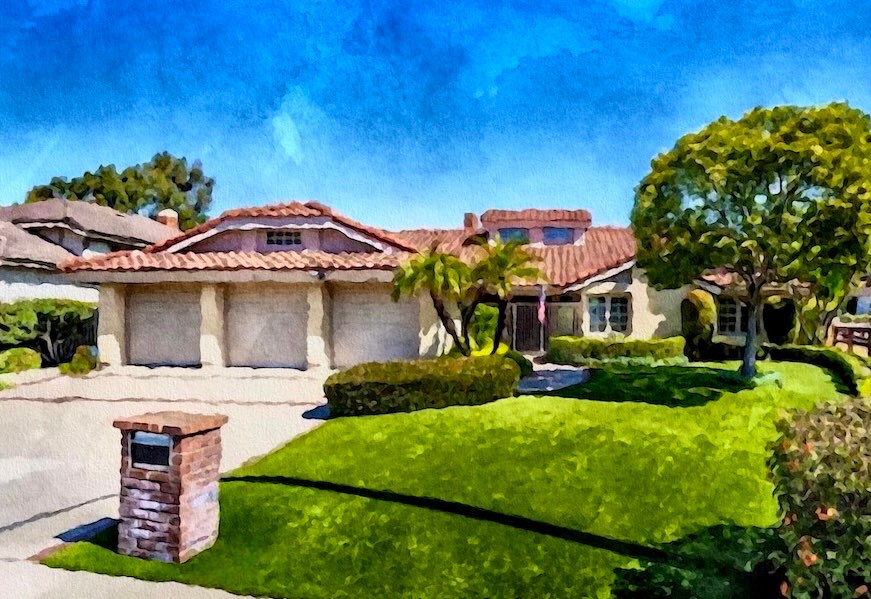
The family purchased the $2.5 million Laguna Hills home before selling their Mission Viejo property. The transaction closed in 24 days.
The financing problem behind the purchase
The borrowers owned a Mission Viejo home valued at approximately $1.6 million and had built substantial equity. That equity could support the next purchase, but it was still locked inside a property they had not sold.
Without another financing structure, the family would have needed to consider less convenient options:
- Sell the Mission Viejo home before making the next purchase.
- Arrange temporary housing between transactions.
- Make an offer dependent on the successful sale of their current property.
- Wait to access their equity and risk losing the Laguna Hills home.
The mortgage qualification also needed to account for how the borrowers earned and reported income. Business owners commonly use legitimate deductions for expenses, depreciation, and other operating costs. Those deductions can reduce taxable income even when the business continues to generate substantial deposits.
The work on this file involved more than selecting a single loan program. We had to coordinate access to the existing equity, document self-employed cash flow, structure the jumbo mortgage, complete the appraisal and underwriting requirements, and keep both financing components moving toward the same closing date.
How the bridge loan and bank statement mortgage worked together
Accessing the down payment with bridge financing
A bridge loan is temporary financing that may allow a homeowner to borrow against equity in a current residence before that property sells. In this transaction, the bridge loan made the Mission Viejo equity available for the down payment on the Laguna Hills home.
That gave the borrowers room to purchase first and sell afterward. They were also able to avoid coordinating a same-day sale and purchase or moving into temporary housing while waiting for the next home.
A bridge loan for a down payment may be useful for a homeowner who:
- Has substantial equity in a current residence.
- Wants to purchase before listing or selling that property.
- Needs access to equity for a down payment or closing funds.
- Is buying a move-up, luxury, or jumbo-financed home.
- Wants more control over the timing of the move.
Bridge loan rates, fees, repayment terms, lien position, and qualification requirements can vary. The borrower should review the expected payoff plan and the total cost of carrying the financing before moving forward.
Using business deposits to document income
The permanent purchase financing was structured as a jumbo bank statement loan. Instead of relying only on adjusted taxable income, the program reviewed recurring deposits shown on the borrowers’ business bank statements.
Many programs review 12 or 24 months of statements, depending on the borrower and current lender guidelines. The statements are evaluated to determine qualifying income based on documented cash flow. Credit, assets, property details, reserves, deposit patterns, business expenses, and other underwriting requirements may still affect eligibility.
This type of self-employed mortgage in California may be considered by business owners, independent contractors, consultants, physicians, dentists, attorneys, real estate professionals, freelancers, investors, and other borrowers whose tax returns do not clearly represent their ongoing business deposits.
Organized documentation matters. The Consumer Financial Protection Bureau’s mortgage application packet checklist notes that self-employed borrowers may need additional income documentation and should ask the lender what records will be required for their situation.
Coordinating both loans through one advisor
The bridge financing and jumbo bank statement mortgage had to work as one transaction strategy. Handling both through the same mortgage advisor reduced handoffs and allowed the equity, income documentation, appraisal, underwriting conditions, and closing schedule to be reviewed together.
The final closing took 24 days. That timeline reflects this specific file and should not be treated as a promise for another transaction. Closing speed can change based on documentation, appraisal timing, title work, property details, underwriting conditions, and the loan programs involved.
Who may want to explore a buy-before-you-sell mortgage strategy?
This structure may be worth reviewing when a homeowner has enough equity for the next purchase but does not want to sell first. It may also fit a self-employed borrower who needs alternative income documentation for a move-up home loan or luxury home financing in California.
A careful review should cover both sides of the transaction. That includes the current home’s estimated equity, existing mortgage balance, expected sale timing, new purchase price, available cash, business deposit history, credit profile, and the cost of carrying multiple obligations during the transition.
Jackie Barikhan works with borrowers who need financing outside a basic W-2 mortgage file. Available programs may include:
- Bridge Loans
- Self-Employed Bank Statement Loans
- Profit and Loss Statement Loans
- Jumbo and Super Jumbo Mortgages
- DSCR investor financing
- Asset-based mortgage programs
- Cash-out refinancing
- Other Non-QM financing options
Program availability, rates, fees, terms, documentation, and eligibility can change. Each borrower and property must be reviewed individually.
Ready to buy before selling?
If your down payment is tied up in your current home or your tax returns do not clearly show your business cash flow, a bridge loan and bank statement mortgage may be options to discuss.
With more than 20 years of mortgage lending experience, Jackie Barikhan helps self-employed borrowers, business owners, investors, and luxury homebuyers review financing structures for complex purchases.
Contact Jackie Barikhan at Summit Lending or call (949) 600-0944 to discuss your current home, available equity, business income, next purchase, and expected timeline.
Jackie Barikhan: NMLS #914312
Summit Lending: NMLS #339255
California DRE: #01962240
Frequently asked questions
Can a bridge loan provide the down payment before my current home sells?
A bridge loan may allow a qualified homeowner to borrow against equity in a current residence and use the proceeds toward another purchase. Available equity, existing liens, property value, borrower qualifications, fees, and current program guidelines will determine what is possible.
Can a self-employed borrower qualify using bank statements instead of tax returns?
Some bank statement mortgage programs evaluate recurring personal or business deposits instead of relying solely on tax returns. The lender may review 12 or 24 months of statements along with credit, assets, property information, business expenses, and other documentation.
Can a bridge loan and bank statement mortgage be used together?
They can be combined in some transactions. The bridge loan may provide access to equity from the current home, while the bank statement mortgage is used to qualify for the new purchase. Both loans must be reviewed together to confirm timing, costs, eligibility, and the planned sale of the existing property.
Will every bridge loan and bank statement purchase close in 24 days?
The 24-day closing applies to this Laguna Hills transaction. Another purchase may require more time depending on the appraisal, title work, documentation, underwriting conditions, property type, loan amount, and borrower profile.
This page provides general information and is not financial, tax, legal, or individualized mortgage advice. Rates, fees, program terms, documentation requirements, and eligibility can change. Loan approval depends on the borrower, property, program, and current lender guidelines.